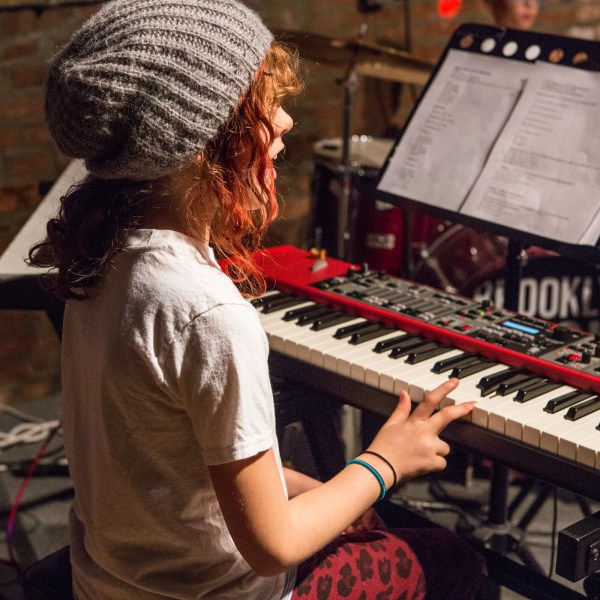
Let’s be real. It can be a REAL STRUGGLE to get your child (or yourself!) to sit down and practice music. After over 30 years of teaching private lessons, I’ve found a series of steps to make practice work at home that take some of the friction out of practicing that really work! It all starts with building a healthy habit, and to do that we must establish a cue.
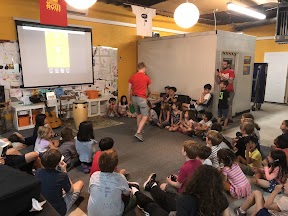
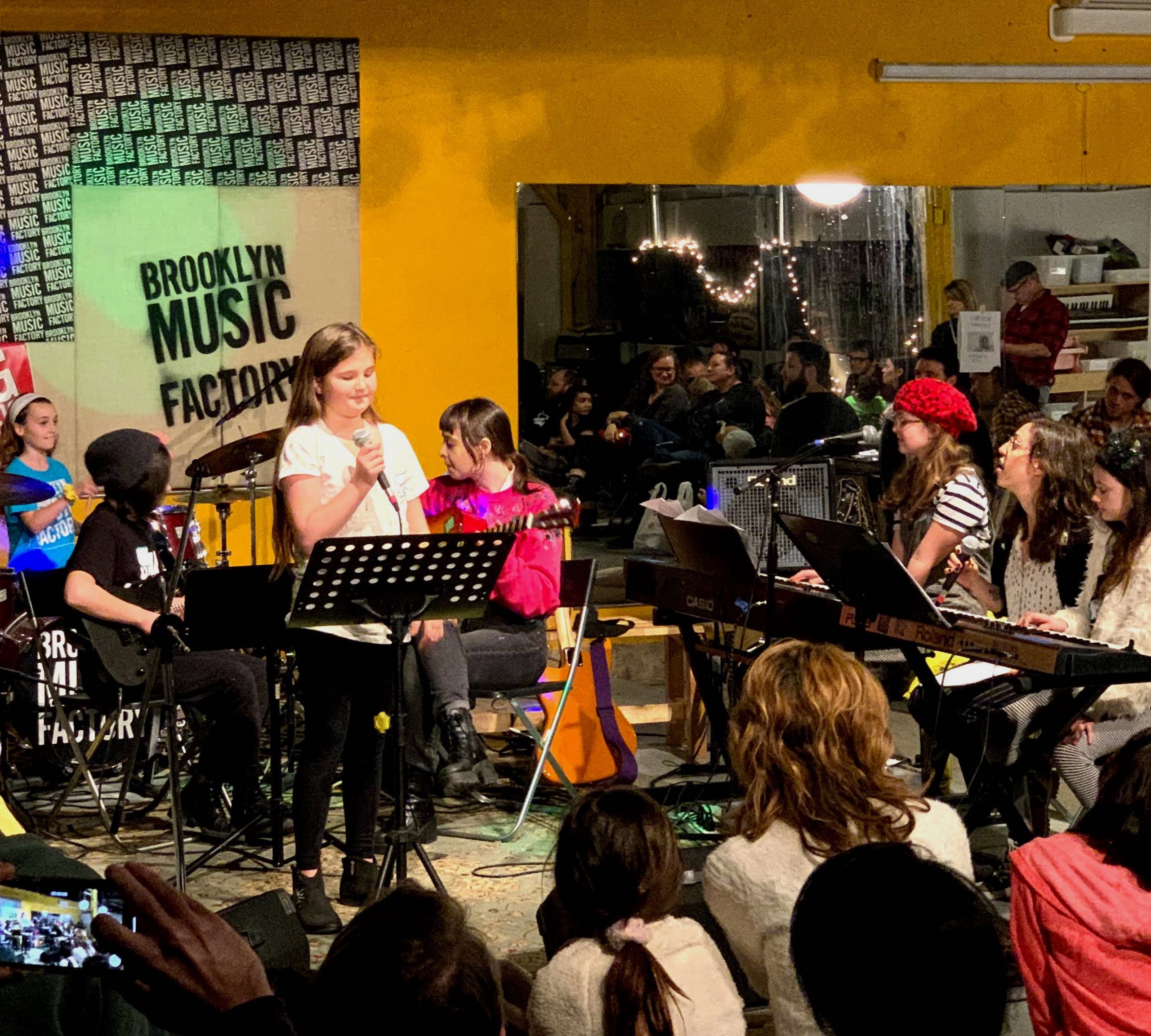
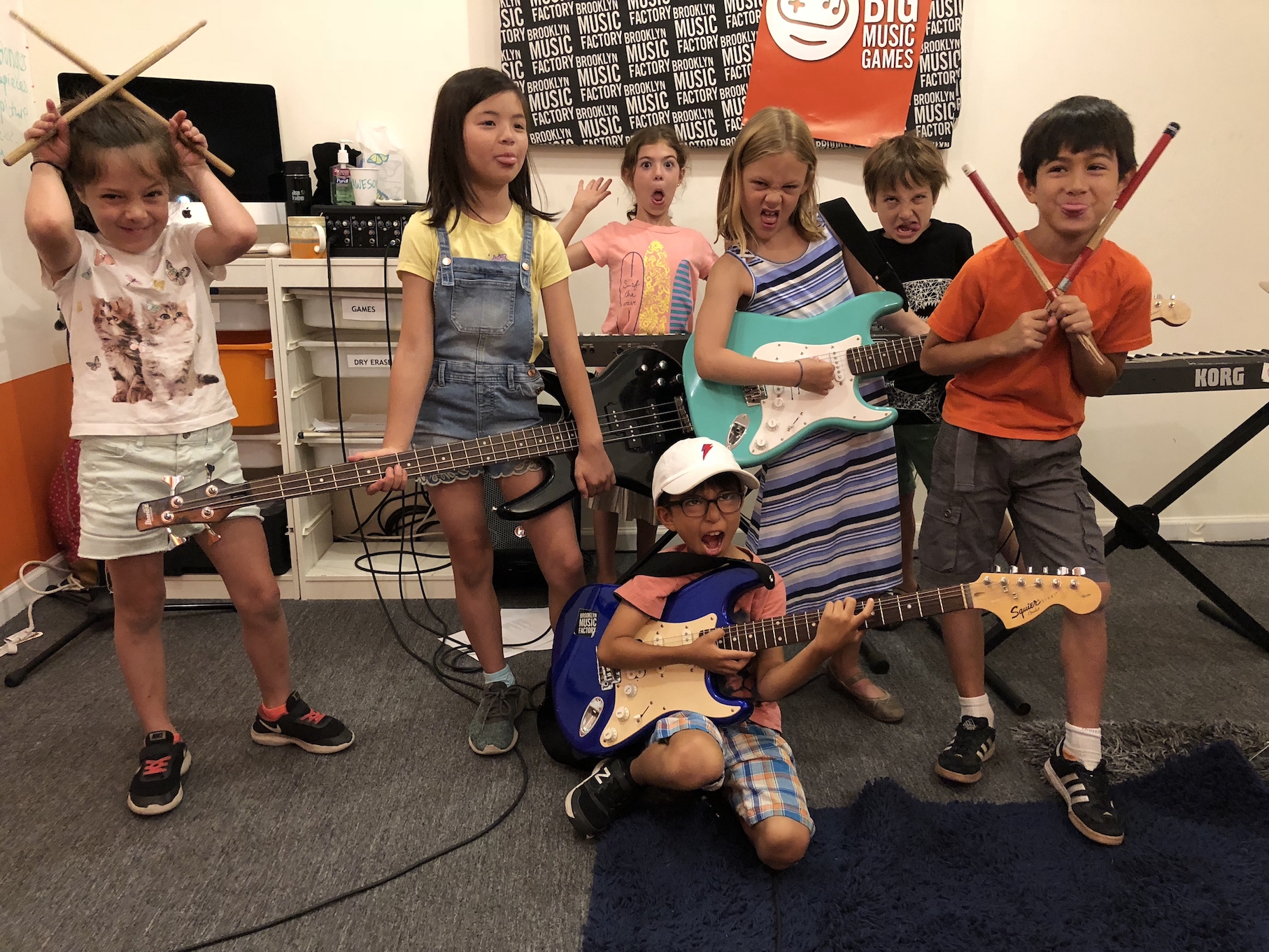
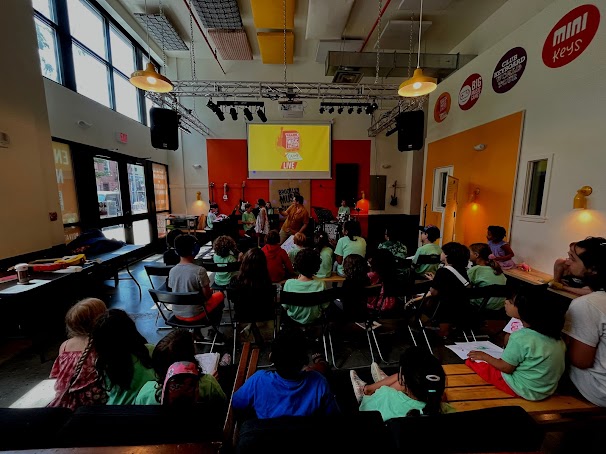
At Brooklyn Music Factory (our music school in Brooklyn), we get lots of questions from parents of new music students, and we encourage each family to try these practice steps, and find the ones that fit best in their home.
Here’s an overview of my 5 part series on Making Practice Work:
(In this post we’ll dive into part one.)
To build a new habit it’s essential to establish a cue.
Every ‘habit loop’ has a cue followed by a routine, and finishing with a reward. It’s a three-part process beautifully outlined in The New York Times bestseller The Power Of Habit by Charles Duhigg that translates beautifully to the practicing music.
What is the cue for practicing in your household?
Is it getting your instrument out of the case? Is it opening up your lesson notes and reading what your teacher has assigned? Is it a certain time of day? Is it simply being in a specific place in your home that signals it’s time to play? Maybe it’s right before dinner every Tuesday and Thursday?
Start with the cue
Let’s talk about the cue first. My cue is built of both a time and an environment. These days I spend the bulk of my day either running my music school or spending time with my kids. The days of gigging every night and practicing all day are long over. So, when the time came to redefine my practice habit, I started with the cue.
In years past, I would generally ease into a morning practice routine, take a lunch break, and then ease back into an afternoon session or possibly swap out practicing with a band rehearsal. These days, I have a fraction of the time I once did to devote to growing as a musician, practicing, and especially rehearsing. So, my solution was to switch that time to the early morning. I set my alarm for 5:30am and shoot for an hour before facing the waking kids. An early-morning practice does require that I get to bed earlier than I was accustomed as a working jazz pianist, but I value the practice and creative hour, so the trade-off is well worth the effort. In addition to the alarm going off, I also always play in my basement studio. It houses my piano, Hammond organ, CDs, stereo, and all the other tools I need to make my practicing efficient and effective.
Time and Location.
What will your cue be? Do you have one already? Certainly a devoted space for making music is invaluable. Is your piano or keyboard somewhere you look forward to going each day? Or is it in a dark corner that only makes you want to leave? In addition, do you have a specific time that allows for focused playing? The time can allow for ten minutes or two hours, that’s not what matters. What matters is that it’s consistent. Set a time and stick to it. It’s 7pm and that’s the time I play piano. No different really then it’s 7am and that’s the time a take a shower.
Build A Routine: Know what to practice.
A couple years back, I discovered that I love group exercise classes at my local YMCA. My whole life I had been going it alone, doing a treadmill or lifting weights. I’d get to the gym pretty regularly but not always. If I was busy with work, the first thing I skipped was the gym. Then I tried a spinning class & I absolutely loved it. Not too many guys were in the class but I didn’t care because the playlist was awesome and the participants would whoop and cheer as they ‘climbed a steep hill.’
What I’ve realized is the routine of the class is always consistent. They turn off the lights & my sneakers glow in the black light. Then the music hits and off we go from one song to the next, sweating like mad and trying not to bounce up and down as I pedal to the groove. When we are done there is always a five minute stretch, a cool down, and finally a group cheer. Yes, it’s all kind of corny, but it works!
A Consistent Routine
I show up without fail every Monday at noon to that class because I know what to expect every time. The music may change and the focus of the class switches between endurance and strength training, but the order of events and ultimate experience is always the same. I come back every week because I can bank on that routine.
Your practice routine must enjoy the same level of organization and consistency. One of my most important teachers over the years, Kenny Werner, used to tell me to get rid of the to-do list. I’d keep a long list of all the things I wanted to be able to do and it would only get longer with each week. He told me, “Tear it up. You are allowed just a couple things on that list, period!”
The longer the list of wants and desires, the easier you can get derailed. As a result, your practice routine never becomes a routine. You keep trying out new ideas, exploring new sounds & possibilities, and as a result never master a single one and worse yet, never establish for yourself a consistent experience of working towards mastery.
In our own backyard
At Brooklyn Music Factory, we have given our lesson notes (we call them HomeRock) tons of thought with the goal of keeping them really simple. They begin with a single goal for the week (if you work towards nothing else all week, at least you can strive to knock out that single accomplishment)–followed by just four sections:
- Skillz & Drillz (a simple technique challenge)
- Gig Song Jam Tracks (an opportunity to work on the song of choice but with a play along MP3)
- BLAM Game (Big Lesson About Music – that builds musical fluency)
- Goal Play (some kind of challenge/game to help you achieve that single goal of the week)
The lesson notes always look the same and there is not tons of new info each week. Build a simple and clear routine that is consistent every time you sit down to practice. Less is more.
Finally, reward yourself… every time!
When I get done with that spinning, I reward my hard work with two activities, a nice 15-minute stretch followed by 15 minutes (or more!) in the sauna. The stretch is essential because it helps my back feel great, and the sauna allows me to catch a quick rest. I don’t run to the next activity. I don’t take a fast shower and hurry out. I reward myself for showing up and putting in a work out! And I reward myself every time! In fact, the truth is, the sauna is my favorite part of the whole process. Without that final relaxation, I doubt I’d keep coming.
Don’t Get Stuck
Practicing an instrument requires being engaged and focused. Building skills takes an enormous amount of patience and faith. We do not grow as musicians in leaps and bounds, we grow very slowly, one plateau at a time. And the thing is, we can be stuck on a plateau for a long, long time…trying to master a single chord progression or melodic pattern or two-handed coordination challenge. Music moves at its own pace so the reward cannot be achieving lofty goals like the satisfaction of playing Carnegie Hall! Musicians need daily rewards that remind us each time we complete our routine that it feels good, that all this hard work is not simply for the gig.
Types of Rewards
A practice reward can come in many forms. I have heard of families using M&Ms or other food as a reward. At Brooklyn Music Factory we provide stickers for our younger students to enjoy the satisfaction of ‘checking of the list.’ For me, I often record the one piece I have been composing or practicing so I can hear myself away from the piano. Just being able to hear the sound and rejoice in it is a highly effective reward for me. I do this just on my iPhone…nothing fancy…just a simple recording that I can play later that day. The complexity of the reward is not the issue, it can literally be just a “well done” and a kiss from a parent, but it does need to come every single time. As Duhigg points out, without a consistent reward, we lose the craving. And without that craving (that will evolve…even with music practice!), we will turn to another habit.
Fill the gaps
Ask yourself what habits you have effectively formed and maintained and then ask yourself how you can apply this pattern to your musical pursuit. It takes work yes, but the barrier is not ‘talent,’ it’s knowing what steps in your habit loop are currently missing and finding solutions to filling these gaps.
Good luck! And please, as always, comment below on your successes as well as your failures. Don’t stop now – keep going with Making Practice Work – Know Where to Practice, Part 2
– Nate
P.S. We’ve put together this Musical Family Toolkit to help parents everywhere start their family’s music lesson journey in the best way possible, based on the lessons we’ve learned here at Brooklyn Music Factory working with thousands of families. Download it today!
[themify_button style=”large purple” link=”https://brooklynmusicfactory.com/musical-family-toolkit-for-parents”]Download the toolkit [/themify_button]