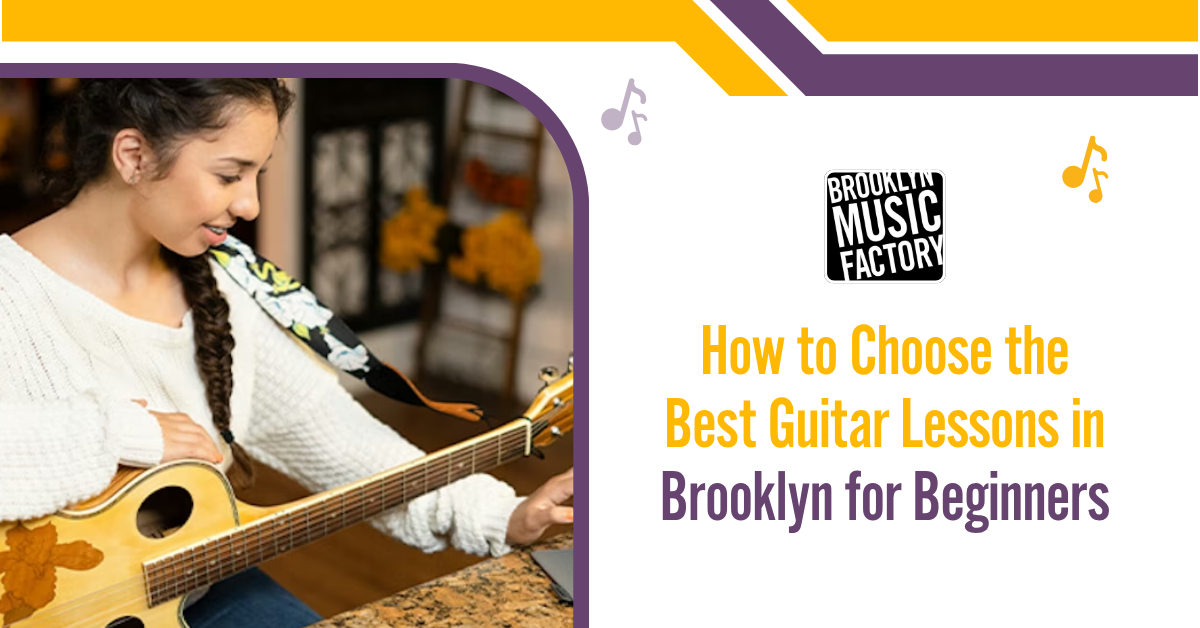
Choosing the best beginner guitar lessons in Brooklyn means finding a school that prioritizes “play” over “perfection” and matches a student’s specific learning style with a supportive community. It is about looking for a space where the curriculum is flexible, the atmosphere is encouraging, and the focus is on building confidence rather than just memorizing scales.
Imagine Sarah, a busy Brooklyn mom living near Gowanus. Her daughter, Maya, has been “air-guitaring” to Taylor Swift for months. Sarah wants to help, but she’s worried. Will a teacher be too strict? Will Maya get bored practicing “Mary Had a Little Lamb” for ten weeks? Sarah remembers her own piano lessons as a kid, sitting in a cold room, staring at a ticking metronome, and feeling like it was a chore. She wants something different for Maya. She wants a place where Maya walks out of her first lesson with a smile, humming a song she actually likes.
The right music school transforms a scary new challenge into the highlight of a student’s entire week.
If you are a parent or an adult beginner, you aren’t just looking for someone who knows how to play the guitar; you are looking for a guide who knows how to teach. The best path forward is choosing a program that balances fundamental skills with the immediate joy of making music.
How to Choose the Best Guitar Lessons
Finding the right guitar classes for beginners in a sea of options can feel overwhelming. Brooklyn is full of talented musicians, but being a great player doesn’t always mean someone is a great teacher. To find the right fit, you have to look at the “vibe” and the “values” of the school.
Look for the “Fun Factor”
If a music school feels like a doctor’s office, run! Music is an art form, not a clinical procedure. A great school for beginners should have colorful walls, friendly faces, and the sound of music echoing through the halls. When you walk in, you should feel a sense of energy. This is especially important when you want to learn guitar for kids. If the environment is stiff, the child will associate music with “work” rather than “play.”
Prioritize a Confidence-Building Environment
The biggest hurdle for any beginner is the fear of sounding bad. A top-tier school creates a “no-judgment zone.” Teachers should celebrate the “happy accidents”, those times a student hits a wrong note that actually sounds cool. When a student feels safe to make mistakes, they take more risks. Taking more risks leads to faster learning.
Private vs. Group: Which is Right for You?
- Group Classes: These are amazing for building social skills and learning how to play “in time” with others. They are perfect for kids who thrive in social settings.
- Private Lessons: These offer 100% of the teacher’s attention. If you are an adult beginner with a very specific set of songs you want to learn, or a teen who wants to dive deep into songwriting, private lessons are the way to go.
Everything Beginners Need to Know: FAQ
Starting something new always comes with a bag full of questions. Here are the most common things people ask when searching for beginner guitar lessons that Brooklyn families can trust.
What is the “Brooklyn Music Factory” style of teaching guitar to beginners?
The focus here is on “Games, Not Drills.” Instead of sitting a child down and forcing them to read sheet music for an hour, we use musical games to teach rhythm, ear training, and chord shapes. This approach keeps the brain engaged and the heart happy. When a student is having fun, they don’t even realize they are doing the hard work of learning an instrument. It’s about building a language of music first, so the instrument feels like a friend, not a machine.
- Do you use standard music books? We use custom-modified materials that focus on creativity and songwriting.
- Is there a lot of homework? We encourage “playing” at home rather than “practicing” chores.
What should I look for in guitar classes for beginners?
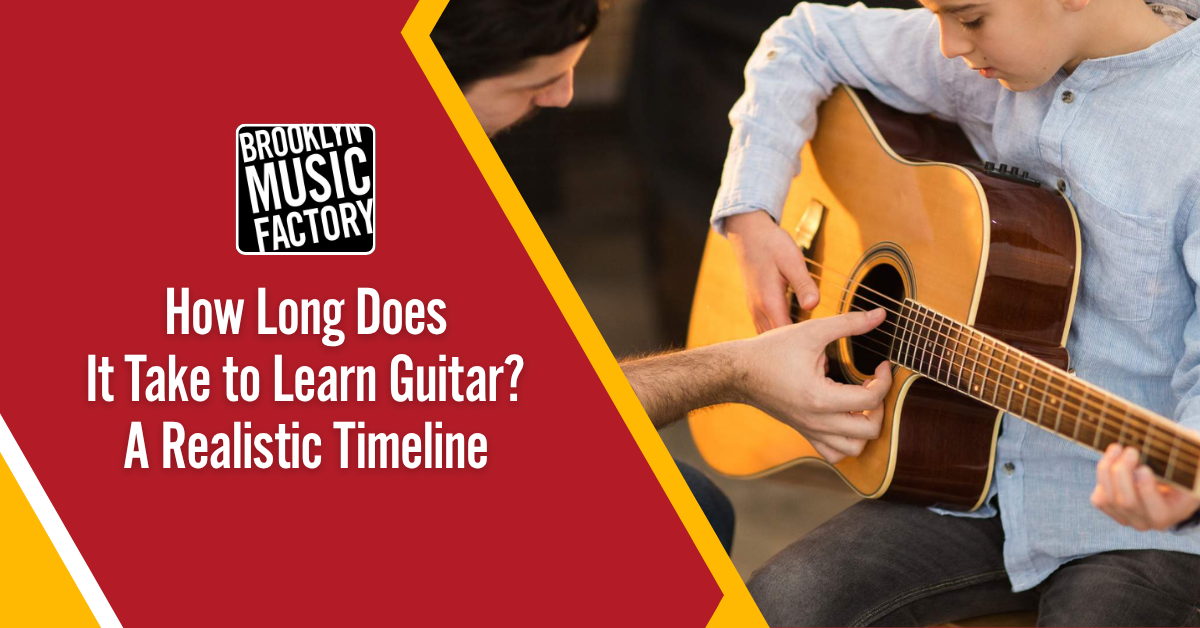
You should look for a curriculum that gets you playing a song within the first few weeks. If a program spends months only on theory without letting you touch the strings to make a melody, you might lose interest. A great class should feel social and interactive. Whether it is a private lesson or a group setting, there should be a clear path of progress that feels rewarding.
- Should the class be quiet? No, a good beginner class is often full of laughter and rhythmic noise.
- Are the teachers certified? Look for teachers who are active musicians and experienced educators.
How do I know if I’ve found the best guitar teachers Brooklyn has to offer?
The best teachers are the ones who listen as much as they talk. They should ask you (or your child) what kind of music you actually like. A great teacher can explain a complex chord in three different ways until it “clicks” for you. They shouldn’t just be show-offs who play fast solos; they should be mentors who are genuinely excited when you hit your first clean G-chord.
- Can I meet the teacher first? Most top schools offer a trial or an introductory tour.
- Do they teach all genres? A versatile teacher can pivot from pop to rock to folk based on your interests.
Is it better to learn guitar for kids in a group or a private setting?
For beginners, especially kids, group classes are often the secret sauce. Seeing other kids struggle and succeed together builds a sense of “we’re in this together.” It removes the “hot seat” pressure of a one-on-one lesson. However, private lessons are fantastic for students who have a very specific goal or who might need a little extra time to process new information.
- Can we switch between the two? Many schools allow you to transition as the student’s needs change.
- Are group classes cheaper? Usually, they provide more social value for younger children.
At what age can a child realistically start guitar lessons?
While every child is different, ages 6 to 8 are usually the “sweet spot.” At this age, their hands are large enough to hold a small-scale guitar, and their focus is developed enough for 30–45 minutes of activity. For even younger kids, “pre-guitar” classes that focus on rhythm and singing are a great way to prep them for the physical instrument later on.
- Do they need a full-sized guitar? No, 1/2 or 3/4 size guitars are essential for small hands.
- Are nylon strings better for kids? Yes, they are much softer on young fingertips than steel strings.
What kind of guitar should a beginner buy first?
Don’t rush out and buy a $2,000 professional guitar. For beginners, a well-made acoustic guitar with “low action” (meaning the strings are close to the fretboard) is perfect. Acoustic guitars are portable and don’t require an amp, making them easy to pick up and play anywhere. If you’re an adult who loves rock music, starting on an electric is also fine, as the strings are actually easier to press down!
- Does the brand matter? Brands like Yamaha or Squier offer great, affordable entry-level options.
- Should I buy used? Used is fine, but have a teacher check it for “warped” necks first.
How long does it take to play a full song?
In a well-structured environment, a beginner can often play a simplified version of a popular song in 2 to 4 weeks. It might not be “radio-ready,” but it will be recognizable! The key is learning “open chords” like G, C, and D, which are the building blocks of thousands of hit songs.
- Do I have to practice every day? Even 10 minutes a day is better than one hour-long session once a week.
- When can I start songwriting? You can start writing your own simple tunes from day one!
Will my fingers hurt when I start learning?
This is a very common fear! Yes, your fingertips will be a little tender for the first week or two. However, this is temporary. As you play, you’ll develop small calluses that make playing totally painless. A good teacher will show you how to press the strings with the right amount of pressure so you don’t overwork your hand.
- Is there a way to make it hurt less? Using lighter gauge strings can help significantly.
- How long until the pain stops? Usually, after about 10 to 14 days of light, consistent playing.
Comparing Your Options: Beginner Lessons at a Glance
| Factor | Beginner-Friendly Lessons | Poor Lessons | Why It Matters |
| First Lesson Goal | Making a sound and playing a simple rhythm. | Reading notes on a page without touching the strings. | Success on day one keeps the student motivated to come back. |
| Teacher Style | Encouraging, patient, and uses modern songs. | Critical, strict, and sticks only to classical books. | Beginners need to feel “cool” and capable, not judged. |
| Environment | Social, community-focused, and vibrant. | Isolated, quiet, and overly formal. | Community keeps students engaged for the long term. |
| Curriculum | Flexible and based on student interests. | Rigid “one-size-fits-all” method. | Interest fades if the student hates the music they are playing. |
| Progress Tracking | Performance opportunities and badges/goals. | No clear milestones or “end game.” | Seeing progress builds the confidence to tackle harder skills. |
Conclusion
Choosing the right place for beginner guitar lessons in Brooklyn can change the course of your (or your child’s) life. It isn’t just about learning an instrument; it’s about joining a community that values your creative voice. Whether you are looking for guitar classes for beginners to start a new hobby, or you want to find the best guitar teachers Brooklyn has for your child, remember that the most important thing is the joy of the process.
A great school will guide you through the finger aches and the tricky rhythms until you are standing tall, guitar in hand, ready to share your music with the world. Don’t wait for the “perfect” time to start. The best time to start is now, while the inspiration is fresh.
Ready to start your musical journey? Visit Brooklyn Music Factory today to book your first class and experience fun, confidence-building lessons designed for beginners.