A creative music curriculum in Brooklyn works best when kids experience music the same way they learned to speak: by listening, playing, and connecting long before reading anything on a page.
At Brooklyn Music Factory, we see this all the time. Kids walk in unsure, sometimes even shy, and within weeks they’re writing songs, playing in bands, and confidently sharing their ideas with others. It’s not magic. It’s a method that actually matches how kids learn.
Instead of forcing kids to decode music, we help them feel it first.
In this guide, we’ll break down how the Ear-Brain-Body approach works, why it’s more effective than traditional lessons, and how it helps kids grow into confident, creative musicians and humans.
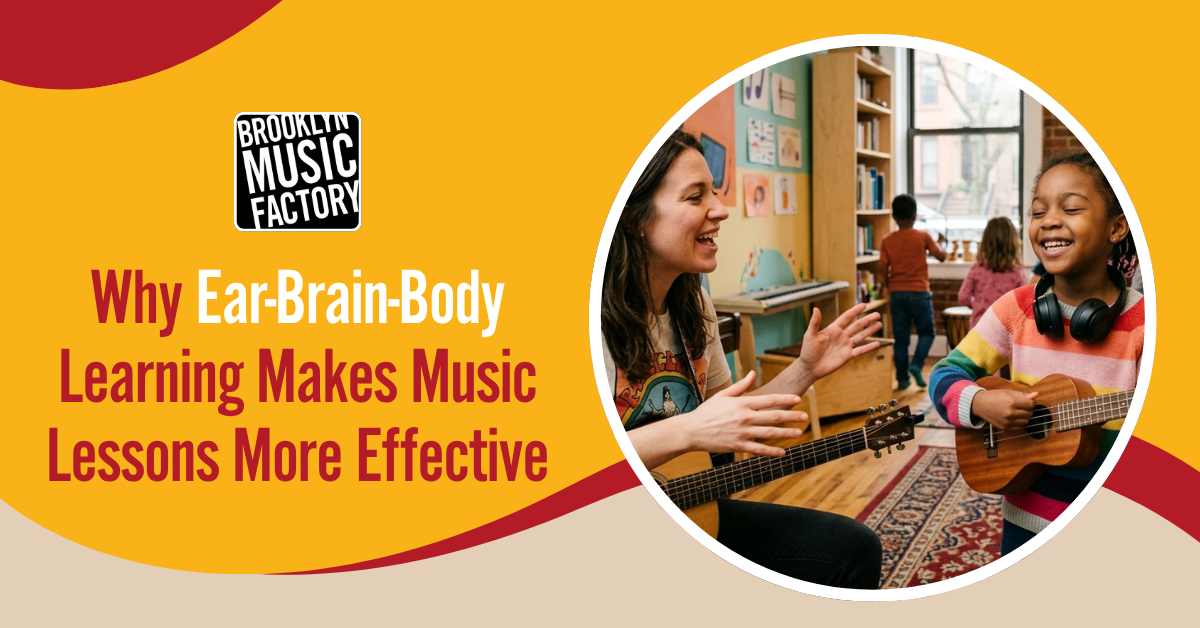
Why Ear-Brain-Body Learning Makes Music Lessons More Effective
A creative music curriculum in Brooklyn is more effective because it treats music as something kids do, not just something they study. Traditional music lessons often lean too hard on a note-first model: a child sits quietly, stares at symbols on a page, and tries to make their fingers match what they see.
That approach misses how kids actually learn.
Think about how a toddler learns to say “Mama.” They don’t start with flashcards. They hear the sound, connect to it emotionally, and then use their body and voice to try it out. Music works the same way. When we ask kids to read music before they can hear it, feel it, and play with it, we often create frustration where there could have been joy.
The Ear-Brain-Body model helps kids feel music before they ever have to read it.
The Problem with Traditional Music Lessons
A lot of adults we meet say some version of the same thing: “I took piano lessons as a kid, but I quit.”
Usually, the issue wasn’t music itself. It was the experience of learning it.
The “Paper Wall”
When a child is focused mainly on reading a page, they often stop really listening. Instead of making music, they’re decoding symbols. That creates what we think of as a “paper wall.” If you take the sheet music away, the child can feel lost.
They may not know how to improvise, jump into a jam, or figure out a melody they heard at home. They learned how to follow, but not how to play freely.
Motivation Killers
Traditional lessons can also fall flat because they leave out creativity. If a child is only playing songs they didn’t choose and don’t feel connected to, practice can quickly become a struggle.
Compare that to a child who gets to write a song about their dog, their neighborhood, or their favorite game. That child is invested. That child wants to come back next week.
That’s one reason modern music education methods matter so much.
What Is Ear-Brain-Body Learning?
To make music lessons effective, we need to engage the three systems that make music possible.
1. The Ear (The Input)
The ear comes first.
In a creative curriculum, kids begin by recognizing patterns and sounds. Before they learn the name of a chord, they learn how that chord feels. Before they talk about melody, they learn to hear the movement of notes. They start to recognize the “home” note in a song and notice when something sounds settled or unresolved.
That kind of ear training gives kids an internal compass. They’re not depending only on correction from a teacher. They’re learning to hear for themselves.
2. The Brain (The Processor)
Once kids hear the patterns, the brain starts making sense of them.
This is where the Brooklyn music curriculum focus on music fluency comes in. Kids learn how rhythm, harmony, melody, and songwriting fit together. They notice that a verse feels different from a chorus. They start to understand why one rhythm makes you want to dance and another makes you want to sway.
It’s not abstract theory for theory’s sake. It’s learning the logic of music by experiencing it.
3. The Body (The Output)
The body is where music becomes real.
At Brooklyn Music Factory, the body is often the first instrument. We clap, stomp, move, sing, and play games because rhythm has to live in the body before it can live on an instrument. If a child can’t clap a rhythm or move to a groove, it will be much harder to play it with confidence.
When rhythm gets locked in physically, it stops feeling like a puzzle and starts feeling natural.
The Result
When a child learns a song through the Ear-Brain-Body model, it sticks.
They aren’t just memorizing finger movements. They’re internalizing a musical language they can use again and again.
Why Children Learn Music Faster Through Experience
Experiential learning is one reason music classes for kids in Brooklyn can be so joyful and high-energy. We don’t just talk about music. We make it.
Learning by Doing
Nobody learns to ride a bike by reading a manual. You learn by getting on, wobbling, trying again, and gradually finding your balance.
Music works the same way.
Kids need space to experiment, mess around, and try things without feeling like they’re failing. That kind of exploration isn’t wasted time. It’s how the brain figures out what sound feels like, what rhythm does, and how the body and instrument work together.
The Power of Improvisation
Improvisation is musical play.
When kids improvise early on, they stop being afraid of making mistakes. They begin to trust their instincts and get comfortable taking small creative risks. In a supportive environment, there are no dead ends, just ideas to build on.
That comfort level changes everything. It’s often the difference between a child who hesitates and a child who jumps in.
How Songwriting Helps Kids Understand Music
If the instrument is the tool, songwriting is what kids build with it.
A strong songwriting program for kids is one of the fastest ways to build real musical fluency.
Why Songwriting Works
When kids write songs, they use their ear, brain, and body all at once.
They hear an idea, shape it into something that makes sense, and then bring it to life through playing and singing. They’re not just repeating music. They’re making decisions. They’re solving problems. They’re expressing something that belongs to them.
That kind of learning goes deep.
Building Identity
Songwriting also changes how kids see themselves.
They stop being “a kid who takes music lessons” and start becoming “a songwriter,” “a bandmate,” or “a musician.” That shift in identity can be incredibly powerful. When a child has a personal connection to the music they’re making, their confidence grows fast.
Parents often tell us their kids start singing around the house, making up songs at random, and feeling proud of what they created.
The Power of Collaborative Music Learning
Solo practice matters, but collaborative music learning is where so much growth happens.
Band-Based Education
In a band, kids have to listen closely, respond to each other, and make room for other ideas. They learn that music isn’t just about their part. It’s about what happens when everyone contributes.
That kind of group learning builds musical and life skills at the same time.
Kids learn teamwork. They learn communication. They learn how to stay with a group, how to recover when something gets off track, and how to feel proud of creating something together.
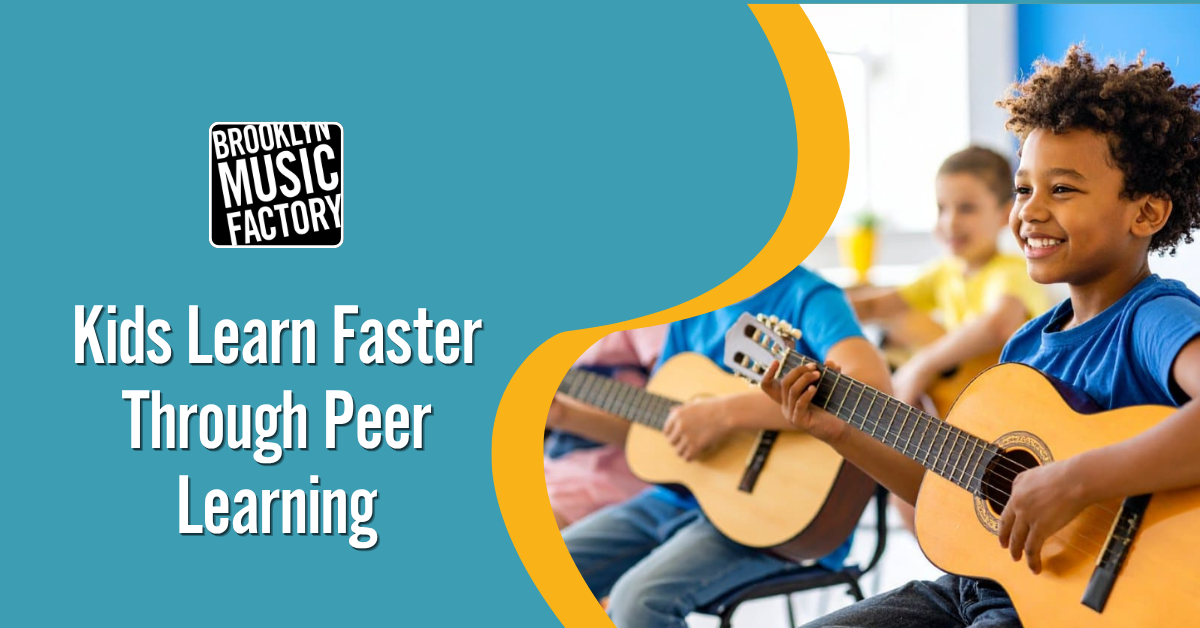
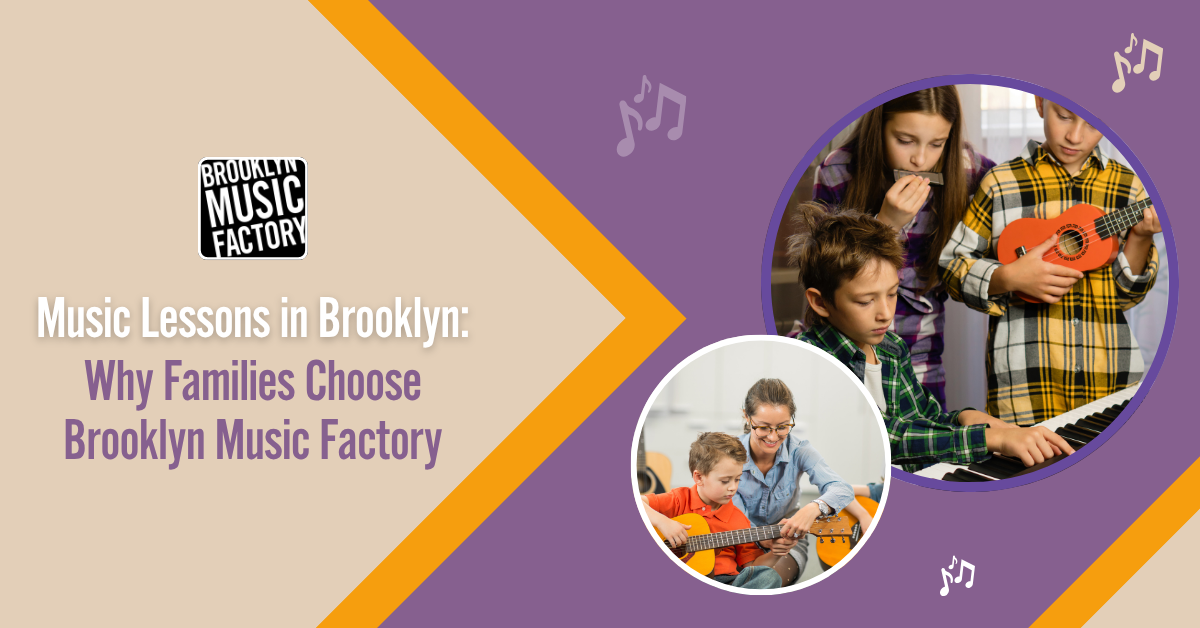
For many kids, especially shy ones, band-based learning can be a breakthrough. There’s safety in being part of a group, and there’s confidence that comes from contributing something real.
Comparison of Methods
Traditional Music Lessons
Focus on reading notes and reproducing songs accurately
Often centered on solo work and one-on-one instruction
Creativity is usually treated as extra
Practice can feel repetitive or disconnected
Ear-Brain-Body Learning
Focus on listening, rhythm, movement, and musical fluency
Built around creativity, songwriting, and exploration
Often includes bands and group collaboration
Practice has a clear purpose because kids are working on music they care about
What a Creative Music Curriculum Looks Like in Practice
A creative music curriculum in Brooklyn should feel alive. It should sound like kids making music, solving problems, laughing, trying again, and discovering what they can do.
Rhythm Games & Storytelling
A class might begin with kids clapping rhythms, moving to a groove, or using drums to tell a story. These games build the connection between ear and body before the brain even labels what’s happening.
It feels playful, but the learning is real.
Band Rehearsals
Once the musical ideas are in the body, kids start building with them. In bands, they explore song structure, suggest parts for different instruments, try out harmonies, and shape original songs together.
They aren’t pretending to be musicians. They are musicians.
Benefits Parents Notice in Their Children
One of the best parts of the Ear-Brain-Body model is that the benefits show up far beyond music.
Parents often notice stronger communication, more resilience, better focus, and more confidence. Kids learn to express ideas, work through mistakes, stay present, and keep going when something feels hard.
And perhaps most importantly, the usual battle over practice starts to fade. When kids are having fun and feel ownership over what they’re playing, music becomes something they want to do.
We hear this in parent feedback again and again. Families describe kids becoming more open, more expressive, and more confident through music.
Conclusion
The Ear-Brain-Body philosophy works because it respects how kids are built to learn.
When we train the ear first, engage the brain through music fluency and songwriting, and involve the body through play and movement, music stops being a chore and starts becoming part of who a child is.
Choosing a creative music curriculum in Brooklyn means choosing an approach that values joy, creativity, confidence, and connection. It means giving kids the chance not just to learn songs, but to become creators.
Give your child the chance to find their own rhythm in a supportive, creative community. Explore Brooklyn Music Factory’s songwriting and band programs today.
FAQ
Why is the Ear-Brain-Body model faster than traditional lessons?
Because it lets kids experience music the way they naturally learn best: by hearing it, feeling it, and doing it before getting stuck in notation.
Does a songwriting program for kids help with instrument technique?
Yes. Kids are much more motivated to work on technique when it helps them play and perform music they helped create.
What are the best music classes for kids in Brooklyn for shy children?
Programs built around bands and group creativity can be especially helpful because they let shy children participate in a supportive, collaborative setting.
How do I find a creative music curriculum in Brooklyn that fits my child?
Look for programs that prioritize listening, movement, songwriting, collaboration, and joy, not just rote memorization and solo performance.
Why is collaborative music learning better than just private lessons?
Because it teaches musical skills alongside teamwork, listening, confidence, and communication, which makes the whole process more engaging and meaningful.